
The biggest bet in tech just got called
OpenAI committed $600 billion in compute spending betting that revenue would keep doubling. This week, the Wall Street Journal revealed it missed its own growth targets and its CFO is publicly questioning the plan. Meanwhile, Google just poured $40 billion into Anthropic — whose revenue tripled in four months — and DeepSeek released a frontier-class model under MIT licence at a fraction of the cost. The first mover's advantage is starting to look like the first mover's burden.
Fortune
OpenAI misses revenue and user growth targets as CFO clashes with Altman over $600 billion in compute commitments
The Wall Street Journal reported that OpenAI has missed its own projections for user growth and revenue, with CFO Sarah Friar warning that slowing growth may not support the company's $600 billion in compute commitments. Shares of partners Oracle and CoreWeave fell on the news.
fortune.com
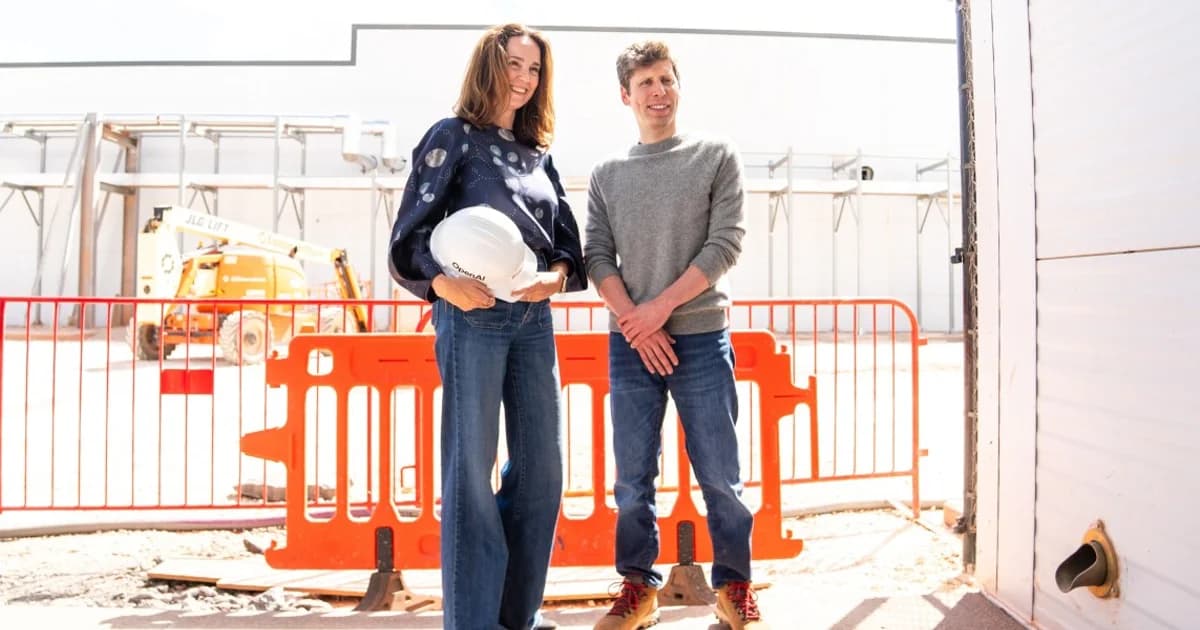
OpenAI set a target of one billion weekly active ChatGPT users. It missed. Fortune reported that the company also fell short of monthly revenue goals on several occasions, and CFO Sarah Friar is warning that slowing growth may not support $600 billion in committed compute spending. Oracle and CoreWeave shares dropped roughly 4-5% on the news. When your partners' stock falls because your CFO says the quiet part out loud, the bet is being called.
In auction theory, there's a concept called the winner's curse: the bidder who wins is systematically the one who overpaid. OpenAI bid the highest on the AI future: $600 billion in infrastructure, a planned IPO, a billion-user target. The gap between that bid and reality is now widening from both directions. Revenue is growing slower than projected. The cost of competing is falling faster than anyone expected.
Take the revenue side first. Google committed up to $40 billion to Anthropic at a $350 billion valuation, with $30 billion contingent on performance milestones. That bet looks different from OpenAI's because of what sits underneath it: Anthropic's annualised revenue tripled from $9 billion to over $30 billion in roughly four months, with more than a thousand enterprise customers spending over $1 million annually. The capital followed the revenue. At OpenAI, the capital is chasing the revenue, and it isn't catching up.
Now the cost side. DeepSeek released V4, a 1.6-trillion-parameter model under the MIT licence with a million-token context window, claiming frontier-class performance at roughly one-twentieth the cost of comparable proprietary models. When an open-source release from a Chinese lab can approximate your output at 5% of the price, your infrastructure commitment stops looking like a moat and starts looking like a mortgage.
The burden of going first
OpenAI's problem isn't execution. ChatGPT is still the most recognised AI product on the planet. The problem is that early commitment creates rigidity. Every dollar locked into data centres is a dollar that can't pivot when the economics shift. And the economics are shifting quarterly: model performance is commoditising, inference costs are collapsing, and the companies that committed less have more room to manoeuvre. Being early to a technology is an advantage; being early to a cost structure is often the opposite.
The way I see it, the question for anyone building on these platforms isn't which lab is winning. It's which capital structure survives the next two years of cost compression. Anthropic has revenue accelerating faster than its commitments. DeepSeek carries almost no infrastructure burden because open-source models run on everyone else's hardware. OpenAI has the biggest position on the table and a CFO publicly questioning whether the hand justifies it.
First-mover advantage assumed that scale would compound. What's compounding instead is the obligation.
Read the original on Fortune
fortune.com