
Google DeepMind Unveils Nano Banana 2: Revolutionary AI Image Generator Democratizes Professional Creation
Google DeepMind launched Nano Banana 2 (Gemini 3.1 Flash Image), blending high-quality outputs with unprecedented speed to democratize professional-grade image creation across Google's product suite.
QuantoSei News
Google DeepMind Unveils Nano Banana 2: Revolutionary AI Image Generator Democratizes Professional Creation
Google DeepMind launched Nano Banana 2 (Gemini 3.1 Flash Image), blending high-quality outputs with unprecedented speed to democratize professional-grade image creation across Google's product suite.
news.quantosei.com
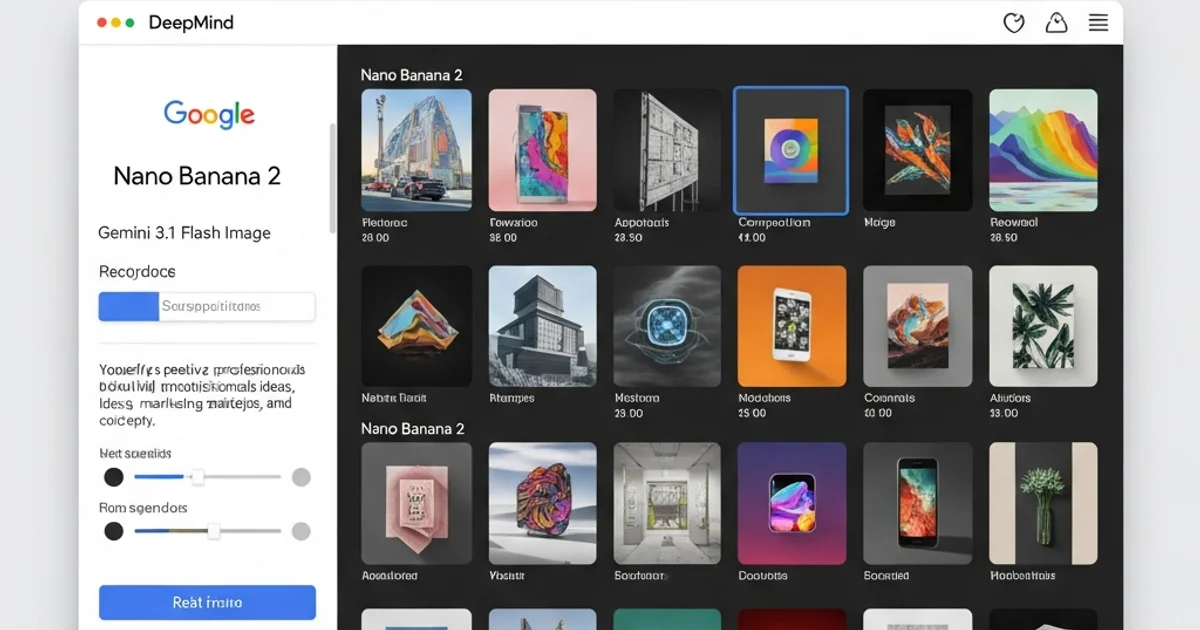
Google just turned image generation into a commodity feature, and that's exactly the point.
The Nano Banana 2 launch from DeepMind isn't really about the model — it's about distribution. Sure, combining the quality of Nano Banana Pro with Gemini Flash speeds is impressive technically, but the real story is ecosystem integration. Google isn't just releasing another image generator; they're embedding professional-grade visual creation directly into every touchpoint where their users already live and work.
This is classic Google playbook: take a capability that exists in isolation, make it fast enough for real-time use, then distribute it through every possible surface. Nano Banana 2 becomes the visual layer across Gmail, Docs, Slides, Android, Chrome — anywhere Google can justify a "generate image" button. The technical achievement enables the strategic one.
For product builders, this shifts the entire competitive landscape. If you're building anything that touches visual content creation, you're no longer competing against standalone image generators. You're competing against Google's ability to make image generation feel like a native feature rather than a separate workflow. The person drafting a presentation doesn't want to leave Google Slides, upload to Midjourney, wait, download, then import back. They want to type a description and have the image appear inline.
The speed barrier
The "unprecedented speed" claim matters more than the quality improvements. Most image generation is already good enough for most use cases — the barrier isn't aesthetic perfection, it's workflow friction. When generation takes 30 seconds, it's a deliberate creative act. When it takes 3 seconds, it becomes a casual enhancement to existing work. That psychological shift changes how people think about using AI imagery entirely.
This is why Google's timing feels deliberate. They've waited until the technology could deliver quality results fast enough to feel native in existing applications. The integration across their product suite isn't an afterthought — it's the entire strategy.
What's interesting is how this forces other platforms to respond. Microsoft will need to match this in Office 365. Adobe will need to decide whether Creative Cloud becomes a more open platform or doubles down on professional workflows. Smaller startups building image generation features will need to justify why their standalone solution is worth the context switch.
The broader question is whether this represents genuine democratisation or just Google extending its platform moat into another domain. Professional-grade creation tools becoming accessible to everyone sounds democratising. Those same tools being exclusively accessible through one company's ecosystem sounds like the opposite.
Either way, the next few months will show us which interpretation wins out. Every major platform is going to need an answer to "why should users leave our environment for visual creation?" Nano Banana 2 suggests Google's answer is simple: they shouldn't have to.
Read the original on QuantoSei News
news.quantosei.com